
Around Atlanta
Kemp Declares State of Emergency, Authorizes 1,000 Troops






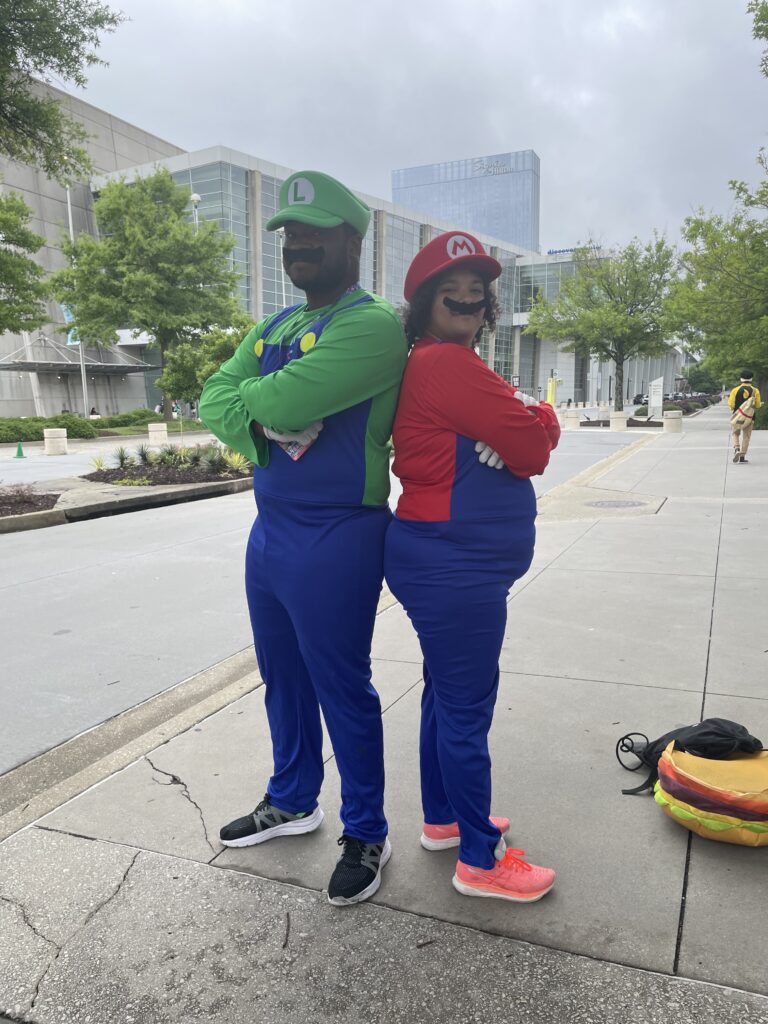
MomoCon 2026, the festival’s 21st year, was held last weekend, May 21–24, at the Georgia World Congress Center. Despite the rain, construction and heavy downtown traffic, anime, gaming, comics and music lovers showed up and made it the event’s biggest year ever.
According to organizers, MomoCon 2026 welcomed 67,277 unique attendees (with more than 180,000 total turnstile attendance) across all four days.
In addition to the usual lineup of artists, vendors, gaming, cosplay and live entertainment, this year marked the addition of the first-ever Wonder Festival US, hosted by MomoCon during the four-day event. Wonder Festival US will return with MomoCon 2027.

Looking forward
This was the first year that MomoCon expanded to use the entirety of two GWCC buildings — Hall A and Hall B. Next year’s festival will also be held in two buildings — Halls B and C.
Plans for MomoCon 2027 are already underway, scheduled for May 27–30, 2027.
Parking and hotels will be available to book later this year. But registration for 2027 is open now at the lowest available four-day rate: momocon.com/registration, and the clock on the MomoCon website has already started counting down.
Finally, for those who attended this year’s event, organizers have a quick survey online to fill out to provide feedback they can use for future events.
You’ll find the survey at forms.gle/jWBdUQdaHCa11jB19.
Photos by Rico Figliolini


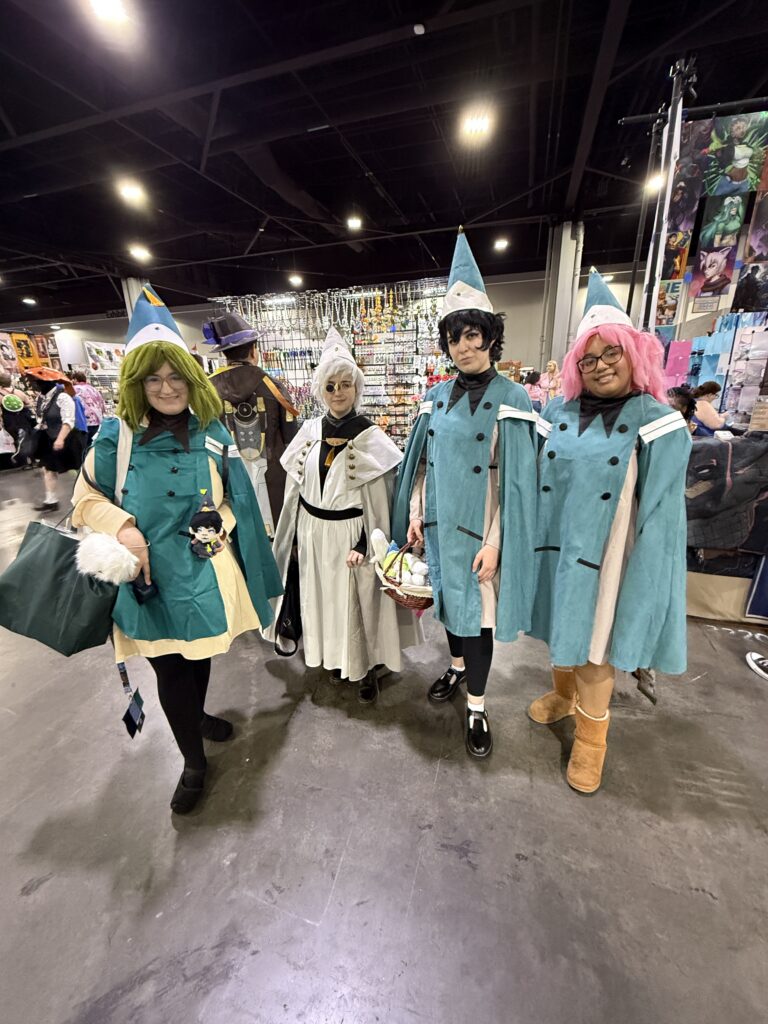


Photos by Zen Taylor


Photos by Shawne Taylor




Playful sculptures celebrate Atlanta Botanical Garden’s rich history of art in nature
Throughout its half-century, the Atlanta Botanical Garden has complemented its lush plant displays with artful accents — from whimsical statues and gushing fountains to sprawling special exhibitions of sculptures by renowned artists such as Henry Moore and Dale Chihuly.
This year marks the Garden’s 50th anniversary, and to celebrate that rich history, ABG will present a revival of its 2006 sculpture exhibit, Niki in the Garden, May 9–September 6.
About the exhibit
The new exhibit will feature 40 sculptures in one of the largest showings of Niki de Saint Phalle’s outdoor work presented in North America. The late French-American artist was best known for her massive, playful sculptures, particularly her “Nanas” — voluptuous works of women that celebrate femininity — as well as colorful animals, mythical figures, totems and even sports heroes.

“What better way to celebrate the Garden’s golden jubilee and its quarter-century tradition of bringing great art set amongst nature to Atlanta than an encore exhibit of Niki?” said Mary Pat Matheson, the Garden’s president & CEO. “The joyous nature of her work lends the perfect accent for marking our 50th year.”
Niki de Saint Phalle
Saint Phalle, who died in 2002, worked with a diverse range of materials, including fiberglass, resin, mosaic glass, ceramic tiles, mirror pieces, bronze, concrete and even found objects.


During the exhibit, the sculptures — most on loan from the Niki Charitable Art Foundation and private collections — will be staged throughout the Garden and indoors. They range in size from the 2,000-pound “Grand Step Totem” and 16.5-foot “Large Yelling Man” to small wall hangings of reliefs.
Visitors who experienced the 2006 exhibit will be dazzled by encountering the blue “Star Fountain” Nana once again holding court in the Cox Courtyard, as well as the joyously iconic “Three Graces” frolicking in the Skyline Garden pond.
In addition, an interpretive exhibit on the artist and her work will be on display in the Fuqua Orchid Center gallery.
For more information, visit atlantabg.org.
Top photo: Niki de Saint Phalle. Grand Éléphant Vase, 1991 © NIKI CHARITABLE ART FOUNDATION, All rights reserved. Photo: Jana Nier Mooneyhan

The new hands-on, active learning gallery will open May 2
The all-new “Orkin Discovery Zone,” a hands-on, active learning gallery, will open at Fernbank Museum on May 2, celebrated by the museum’s first-ever “Bug Fest.”
According to a release about the Discovery Zone, the new gallery marks the next phase of a $27 million transformation to revolutionize the guest experience and redefine how audiences engage with the museum now and in the future.
Through these investments, Fernbank aims to “set a new standard for museum experiences, revealing the interconnectedness of science, nature and human culture across the museum, 3D theater and forest.”
Orkin Discovery Zone details
The Orkin Discovery Zone is a hands-on experience that features inquiry-based activities, authentic objects, live animal terrariums and artwork to inspire guests to explore the natural world and its multi-faceted disciplines.
“We want to use this space to make science, nature and human culture – the pillars of our museum – as accessible and hands-on as possible for all ages,” said Sarah Arnold, director of education at Fernbank. “We are inviting guests to actively participate in science and take that experience with them into the world.”
Armed with natural curiosity, guests become scientists as they investigate topics like biodiversity, classification, biomimicry, senses and communication, as well as the intersections between humans and nature, through a series of interactive experiences.

Investigating biodiversity and classifying organisms are two ways scientists can interpret the natural world. Guests will identify insect anatomy and discover the difference between bugs and insects. They can also build their own bug using spinning discs to combine the head, thorax and abdomen from different species.
Animal habitats and displays
The gallery also features a live animal habitat with a Madagascar hissing cockroach to show that no matter the shape, all insects have the same anatomical features. A live frog terrarium reveals the characteristics of a frog by exploring their common anatomical traits.
To further connect classification across the natural world, scopes looking out into WildWoods invite guests to identify deciduous and evergreen trees by examining their leaves and bark.
Guests will discover biomimicry, including how animals and plants have inspired human design — leading to advances in the medical field, engineering, fashion, transportation and more.
Larger-than-life bees and termite mound sculptures, as well as hands-on interactives, allow guest to discover real examples, such as how plant burrs led to the invention of hook-and-loop fasteners like Velcro and how honeycomb hexagons inspired efficient bridge design.
A live tarantula and an interactive web-weaving activity demonstrate how spiders have influenced the development of products, such as body armor and medical sutures.
Communication in the animal world
Inside the gallery, animal communications are highlighted as another fascinating way that scientists explore the natural world. Through auditory communication panels, guests learn different animal sounds that allow for communication, ranging from whales to cicadas to alligators.
Other experiences reveal how animals use visual cues to communicate, including examples of blinking fireflies, lizards bobbing their heads and birds posturing.
Larger-than-life leafcutter ant sculptures draw guests into an exploration of how ants utilize chemical communication through pheromones and antennae.
Natural history exploration and discovery
Discovery drawers feature a variety of natural history specimens, including rocks and minerals, insects and animal skulls. As guests investigate the specimens, they explore how classification is used in all sciences through topics like biodiversity, animal diet, native and non-native species and animal flight.
Other drawers reveal how humans use materials from the natural world to create a wide variety of cultural objects, including pottery, clothing and jewelry.
In other areas, art and conservation intersect through a display of artwork created from recycled materials like aluminum cans, scraps of paper and plastic bottle tops. Conservation stories from the sea and land are represented with artwork featuring sea turtles, darter fish, elephants and more.
Commitment and support
“We are proud to support Fernbank’s vision for creating experiences that make science and nature come alive,” said Kathleen Rollins, executive director of The Gary W. Rollins Foundation. “Education is important to the work we do, and we are honored to be a part of the Orkin Discovery Zone.”
“At Orkin, our expertise goes beyond pest control, and we’re committed to sharing what we know about insects and their roles in our world,” said Pat Chrzanowski, president of Orkin USA. “By making science interactive and accessible, the Orkin Discovery Zone has the potential to ignite lifelong curiosity, helping to inspire the next generation of entomologists.”
The Orkin Discovery Zone continues the museum’s commitment to create new experiences, learning galleries and accessibility upgrades between 2025-2027.
The new exhibit. “Our Place in the Cosmos” debuted inside the Star Gallery in November 2025. Following the opening of the Orkin Discovery Zone, the transformation will culminate in 2027 with the grand opening of a new signature exhibit, “Changing Earth,” as well as the addition of a new temporary exhibition gallery, a second passenger elevator, additional automatic doors and more.
For more about Fernbank Museum or to purchase tickets, visit fernbankmuseum.org.

Eric Christ: Update on E Jones Bridge Road Closure

GAC Celebrates Graduating Class of 2026

Debbie Mason Memorial Scholarship for Drama Awarded for 2026

GAC Welcomes Coach Lamar Howard to the Varsity Boys Soccer Program

A Look at MomoCon 2026

Roads, Rezoning & the City of Peachtree Corners’ Purchase of CinéBistro

Eric Christ: Traffic, Town Center and Run-off Voting Updates

Summer Concert Series: The Soul Cartel
Summer Concert Series: The Soul Cartel

From the Mayor: Protecting the Heart of Our Town Center
Roads, Rezoning & the City of Peachtree Corners’ Purchase of CinéBistro
Eric Christ: Traffic, Town Center and Run-off Voting Updates
GAC Welcomes Coach Lamar Howard to the Varsity Boys Soccer Program
A Look at MomoCon 2026
Debbie Mason Memorial Scholarship for Drama Awarded for 2026
Eric Christ: Update on E Jones Bridge Road Closure

Light up the Corners [Video]

Capitalist Sage: Business Leadership in Your Community [Podcast]

Cliff Bramble: A Culinary Adventure through Italy

Top 10 Brunch Places in Gwinnett County

A Hunger for Hospitality

THE CORNERS EPISODE 3 – BLAXICAN PART 1

Top 10 Indoor Things To Do This Winter

The ED Hour: What it takes to Remove Barriers from Education
-

 Peachtree Corners Life2 days ago
Roads, Rezoning & the City of Peachtree Corners’ Purchase of CinéBistro
-
City of Peachtree Corners2 days ago
Eric Christ: Traffic, Town Center and Run-off Voting Updates
-
City of Peachtree Corners19 hours ago
Summer Concert Series: The Soul Cartel
-
City of Peachtree Corners19 hours ago
From the Mayor: Protecting the Heart of Our Town Center


